

Last week, the interwebs were all a flutter with a video of a monkey playing pong. The video was uploaded by Neuralink, a start up backed by Elon Musk with the goal of creating brain/technology interfaces, and shows a nine year old macaque monkey playing the classic computer game pong using a neural implant. The monkey was playing pong just by thinking it.
This raises some really interesting ethical questions about our relationship with technology…as well as questions about using animals as test subjects. Is there a limit to how much we want to integrate technology into our lives? Is there a point when it’s embedded inside our bodies that we’ve potentially gone too far?
But this doesn’t seem to be the debate we’re having. Instead we’re encouraged to accept the ethics of brain/technology interfaces through a reference to edge examples that justify the research. In this case, Elon Musk justified the work with a tweet about enabling people with paralysis to communicate.
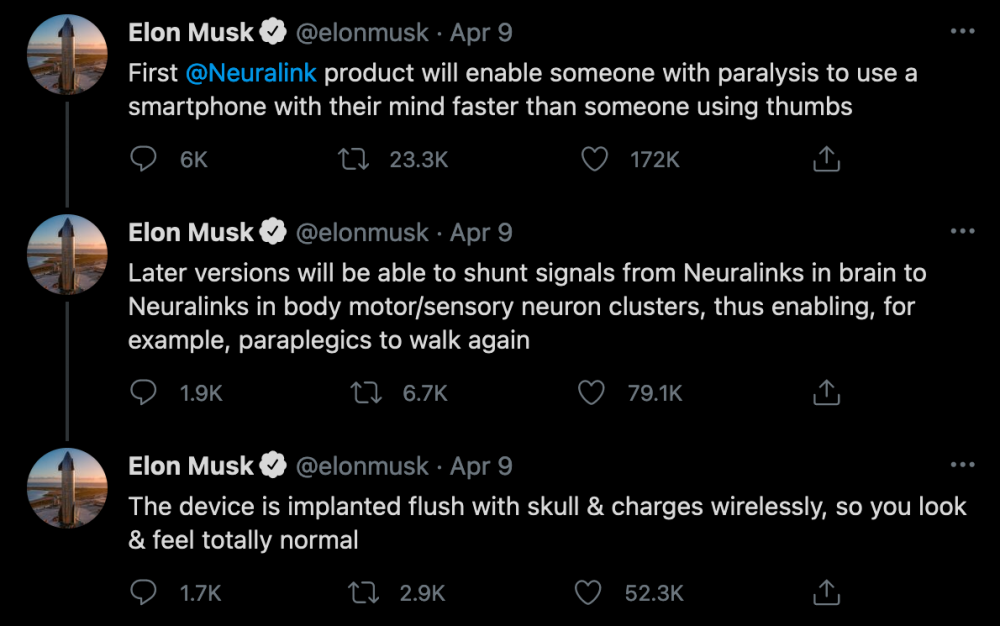
I don’t think this is an accident. I think it’s an intentional strategy to reduce opposition to what is otherwise controversial research. What if Elon’s tweet was ‘Neuralink product will enable someone with more money to think and act faster than someone relying on straight biology’? Would we be so accepting of this type of research? Maybe we would or maybe we wouldn’t but perhaps a less emotive example of the technology’s application would encourage more people to engage in thoughtful debate.